
.png)
.png)
.png)

.png)
.png)

.png)
.png)

.png)
.png)
















Q-Oss+
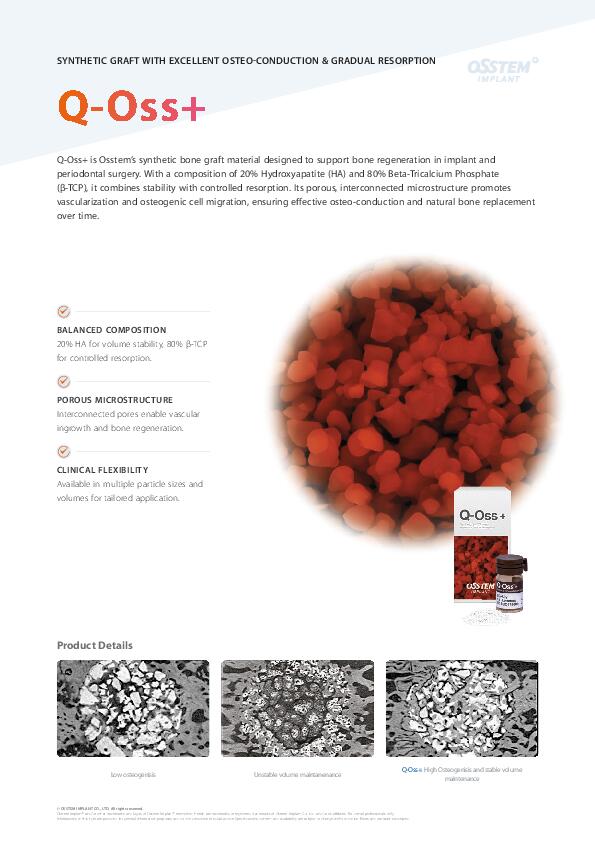
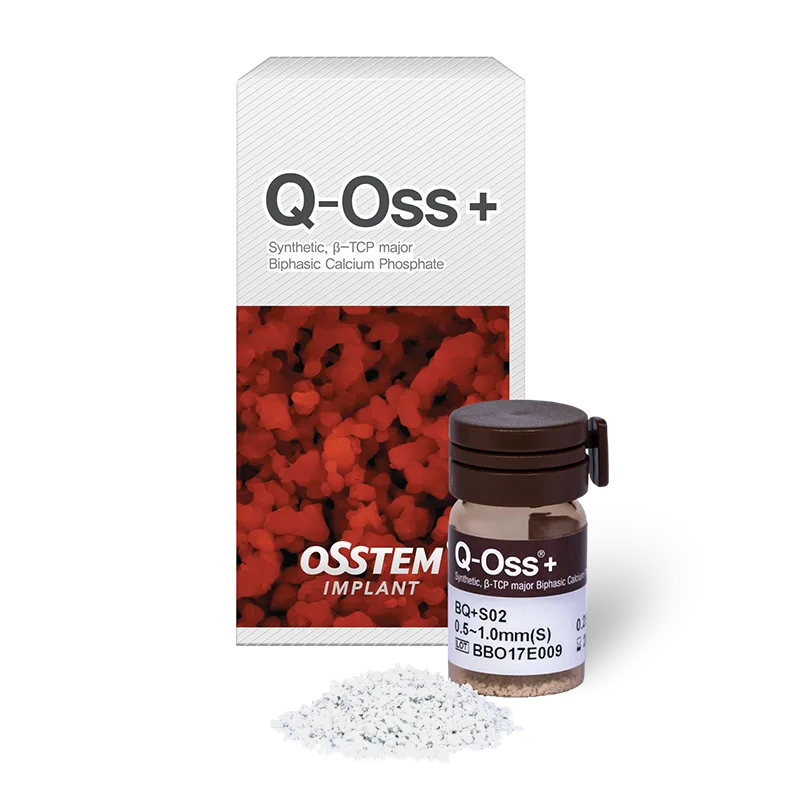
Q-Oss+ is Osstem’s synthetic bone graft material designed to support bone regeneration in implant and periodontal surgery. With a composition of 20% Hydroxyapatite (HA) and 80% Beta-Tricalcium Phosphate (β-TCP), it combines stability with controlled resorption. Its porous, interconnected microstructure promotes vascularization and osteogenic cell migration, ensuring effective osteo-conduction and natural bone replacement over time. Available in multiple particle sizes (0.5–1.0 mm, 1.0–2.0 mm) and volumes (0.1 g to 2.0 g), Q-Oss+ provides flexibility to meet diverse clinical indication.

Reliable synthetic graft with excellent osteo-conduction and gradual resorption
Q-Oss+ is Osstem’s synthetic bone graft material designed to support bone regeneration in implant and periodontal surgery. With a composition of 20% Hydroxyapatite (HA) and 80% Beta-Tricalcium Phosphate (β-TCP), it combines stability with controlled resorption. Its porous, interconnected microstructure promotes vascularization and osteogenic cell migration, ensuring effective osteo-conduction and natural bone replacement over time. Available in multiple particle sizes (0.5–1.0 mm, 1.0–2.0 mm) and volumes (0.1 g to 2.0 g), Q-Oss+ provides flexibility to meet diverse clinical indication.
Why It Matters for Clinicians
Synthetic grafts are an important alternative to xenografts or autografts, offering consistency, safety, and availability. Osstem Q-Oss+ provides clinicians with a predictable, osteoconductive scaffold that gradually resorbs while being replaced by natural bone. Its balance of HA and β-TCP ensures stability where needed, while still allowing for remodeling making it a trusted option for sinus lifts, socket preservation, ridge augmentation, and periodontal defects.
.png)
20% HA for volume stability, 80% β-TCP for controlled resorption
Interconnected pores enable vascular ingrowth and bone regeneration
Resorbs predictably, supporting long-term bone replacement
Reliable scaffold for new bone formation
Available in multiple particle sizes and volumes for tailored application
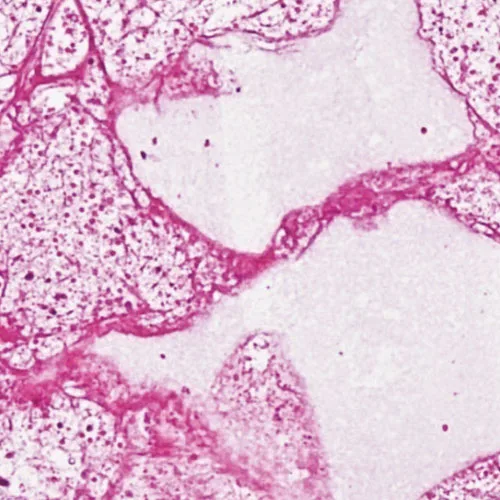
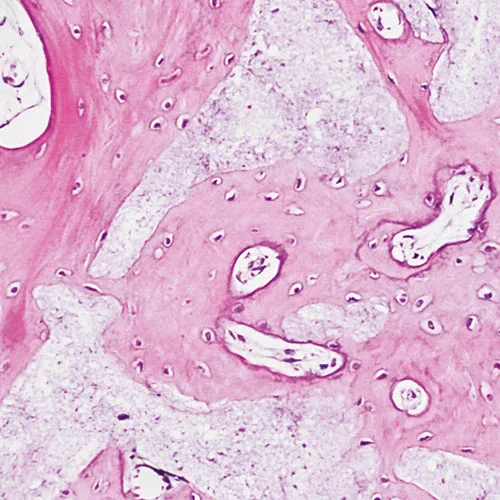
From graft placement to new bone formation
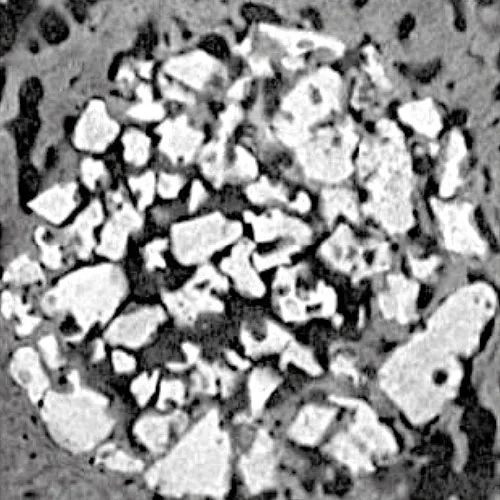
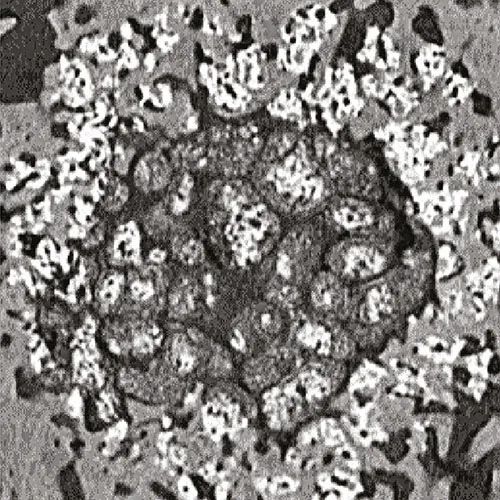
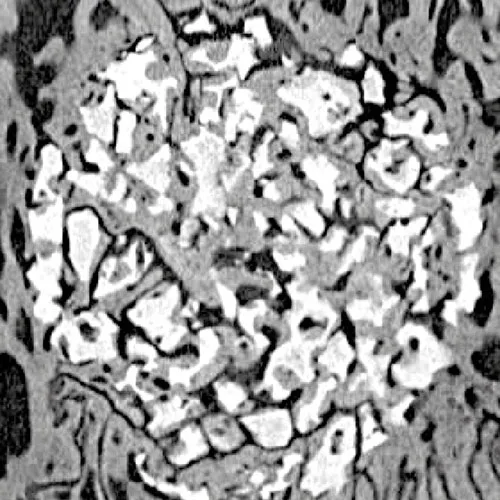
- Immediately after grafting, Q-Oss+ supports the defect site by integrating with the fibrin network and blood cells
- During osteogenesis, Q-Oss+ is gradually resorbed as new bone forms and matures around the grafted area
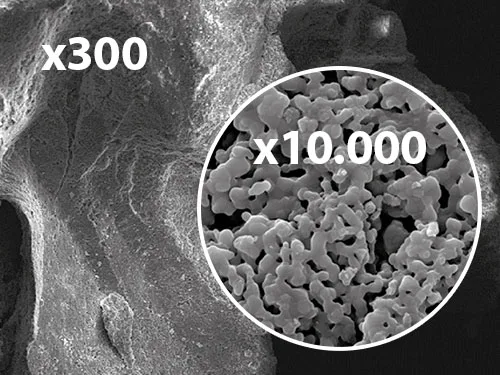
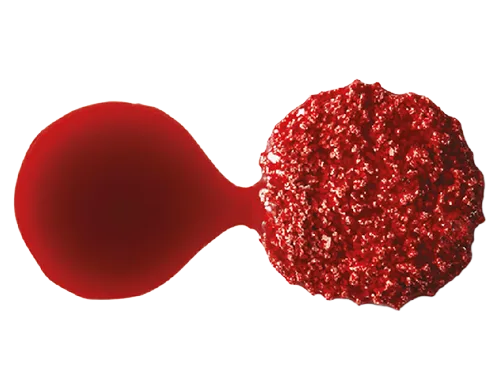
Outstanding pore structure and blood wettability
- Inter-connected micropores create high specific surface area (mean 2.0 m²/g)
- Outstanding blood permeability and osteoblasts in blood lead to osteogenesis
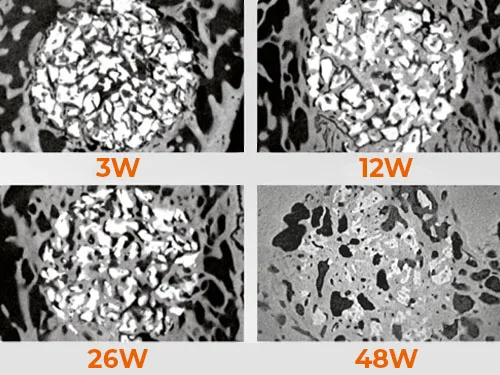
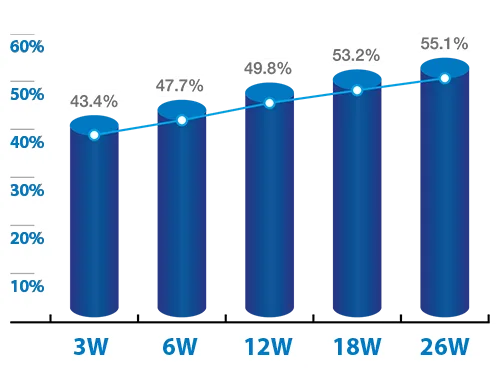
Effective bone formation in implant procedures
- Q-Oss+ is gradually disintegrated / absorbed during the period of new bone formation
- Appropriate for implant surgeries and posterior areas where bone replacement is required
Optimal composition for osteogenesis
- Q-Oss+ is composed of β-TCP 80% + HA 20%, which is the optimal composition for osteogenesis